SEPSIS
A MEDICAL EMERGENCYSepsis is the body's extreme response to an infection. It can cause organ failure and death if not recognised and treated early.
HOW SEPSIS DEVELOPS
1INFECTION
Bacteria, viruses or fungi enter the body.
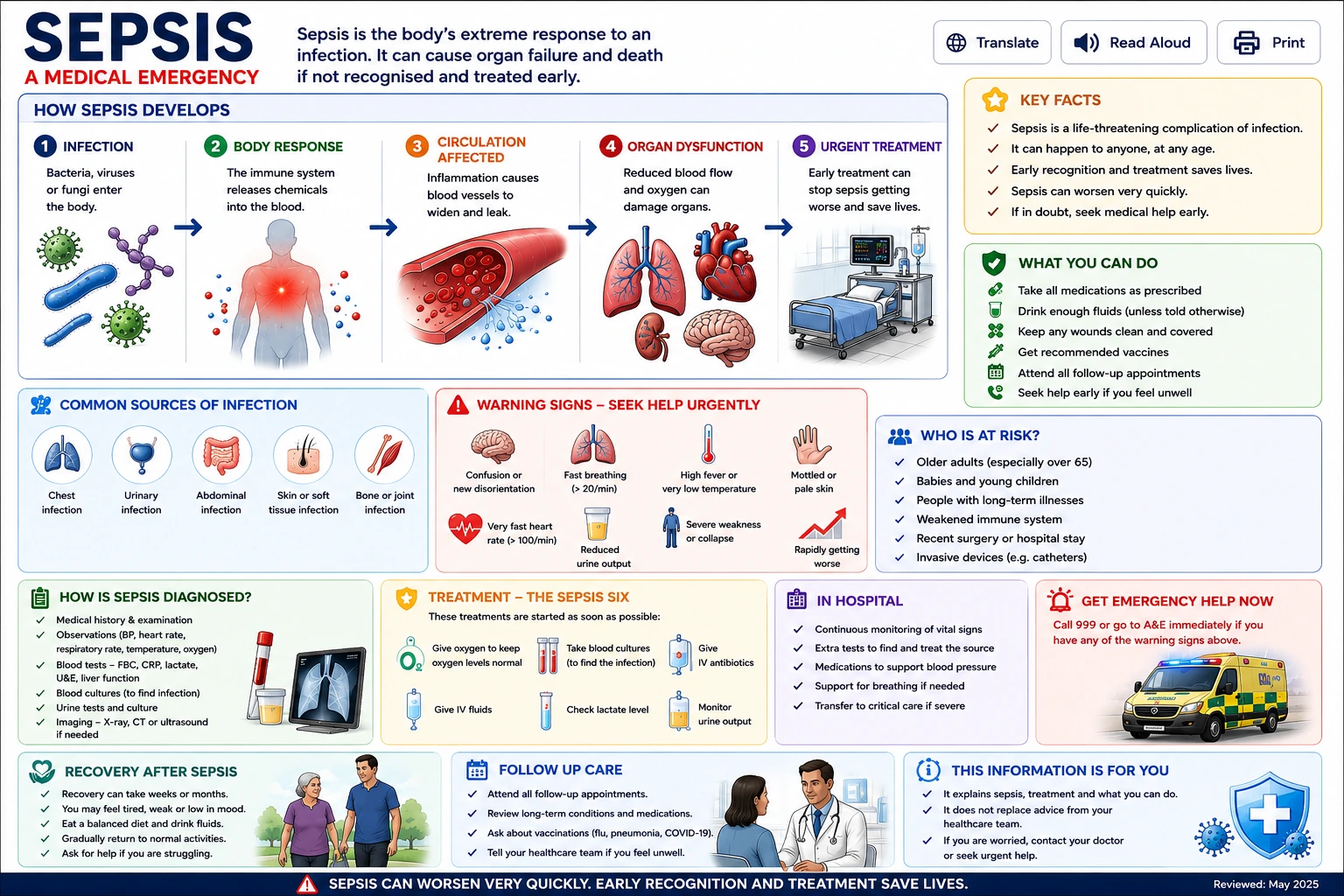
2BODY RESPONSE
The immune system releases chemicals into the blood.
3CIRCULATION AFFECTED
Inflammation causes blood vessels to widen and leak.
4ORGAN DYSFUNCTION
Reduced blood flow and oxygen can damage organs.
5URGENT TREATMENT
Early treatment can stop sepsis getting worse and save lives.
KEY FACTS
- Sepsis is a life-threatening complication of infection.
- It can happen to anyone, at any age.
- Early recognition and treatment saves lives.
- Sepsis can worsen very quickly.
- If in doubt, seek medical help early.
WHAT YOU CAN DO
- Take all medications as prescribed
- Drink enough fluids unless told otherwise
- Keep any wounds clean and covered
- Get recommended vaccines
- Attend all follow-up appointments
- Seek help early if you feel unwell
COMMON SOURCES OF INFECTION
- Chest infection
- Urinary infection
- Abdominal infection
- Skin or soft tissue infection
- Bone or joint infection
WARNING SIGNS — SEEK HELP URGENTLY
- Confusion or new disorientation
- Fast breathing
- High fever or very low temperature
- Mottled or pale skin
- Very fast heart rate
- Reduced urine output
- Severe weakness or collapse
- Rapidly getting worse
WHO IS AT RISK?
- Older adults
- Babies and young children
- People with long-term illnesses
- People with a weakened immune system
- Recent surgery or hospital stay
- People with invasive devices such as catheters
HOW IS SEPSIS DIAGNOSED?
- Medical history and examination
- Vital-sign observations
- Blood tests including lactate and organ-function tests
- Blood cultures when indicated
- Urine testing
- Imaging when needed to identify the source
TREATMENT
- Give oxygen when needed
- Take blood cultures when indicated
- Give IV antibiotics when bacterial infection is suspected
- Give IV fluids when clinically appropriate
- Check lactate level
- Monitor urine output
IN HOSPITAL
- Continuous monitoring of vital signs
- Extra tests to find and treat the source
- Medicines to support blood pressure when required
- Support for breathing if needed
- Transfer to critical care if severe
GET EMERGENCY HELP NOW
Call 999 or go to A&E immediately if you have any of the warning signs above.
RECOVERY AFTER SEPSIS
- Recovery can take weeks or months.
- You may feel tired, weak or low in mood.
- Eat a balanced diet and drink fluids.
- Gradually return to normal activities.
- Ask for help if you are struggling.
FOLLOW UP CARE
- Attend all follow-up appointments.
- Review long-term conditions and medications.
- Ask about vaccinations when appropriate.
- Tell your healthcare team if you feel unwell.
THIS INFORMATION IS FOR YOU
- This explains sepsis, treatment and what you can do.
- It does not replace advice from your healthcare team.
- If you are worried, contact your doctor or seek urgent help.